 Image 1 of 2
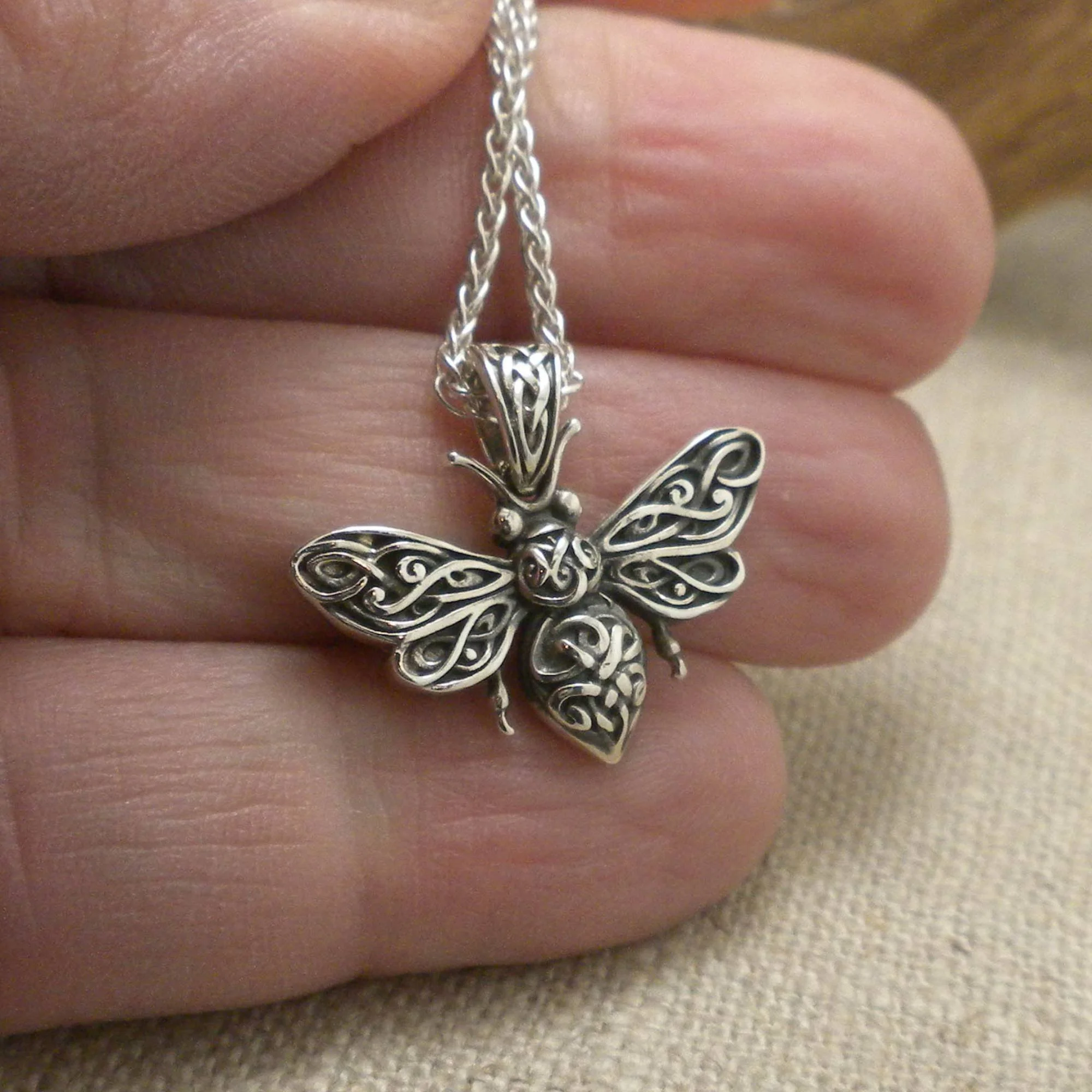 Image 2 of 2
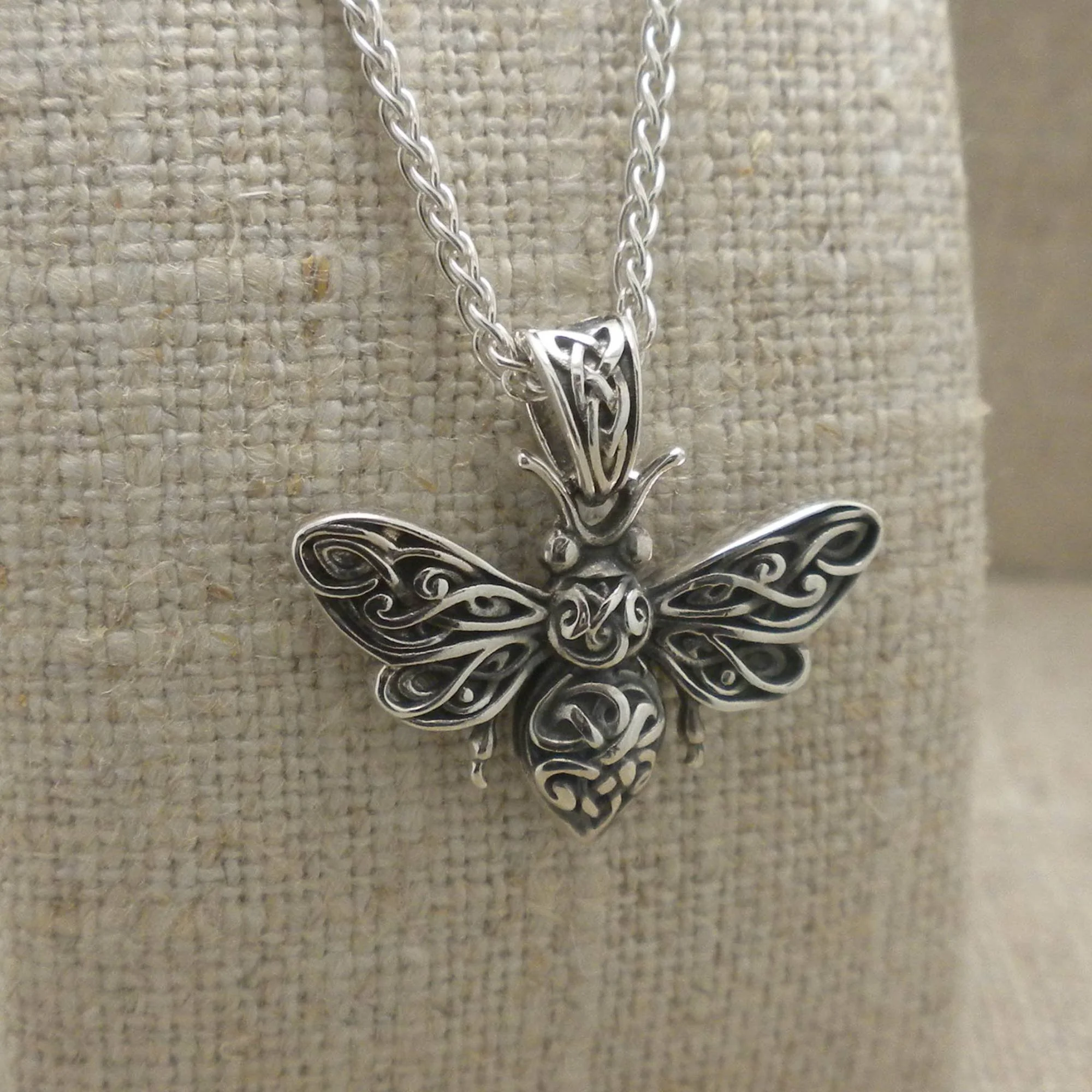
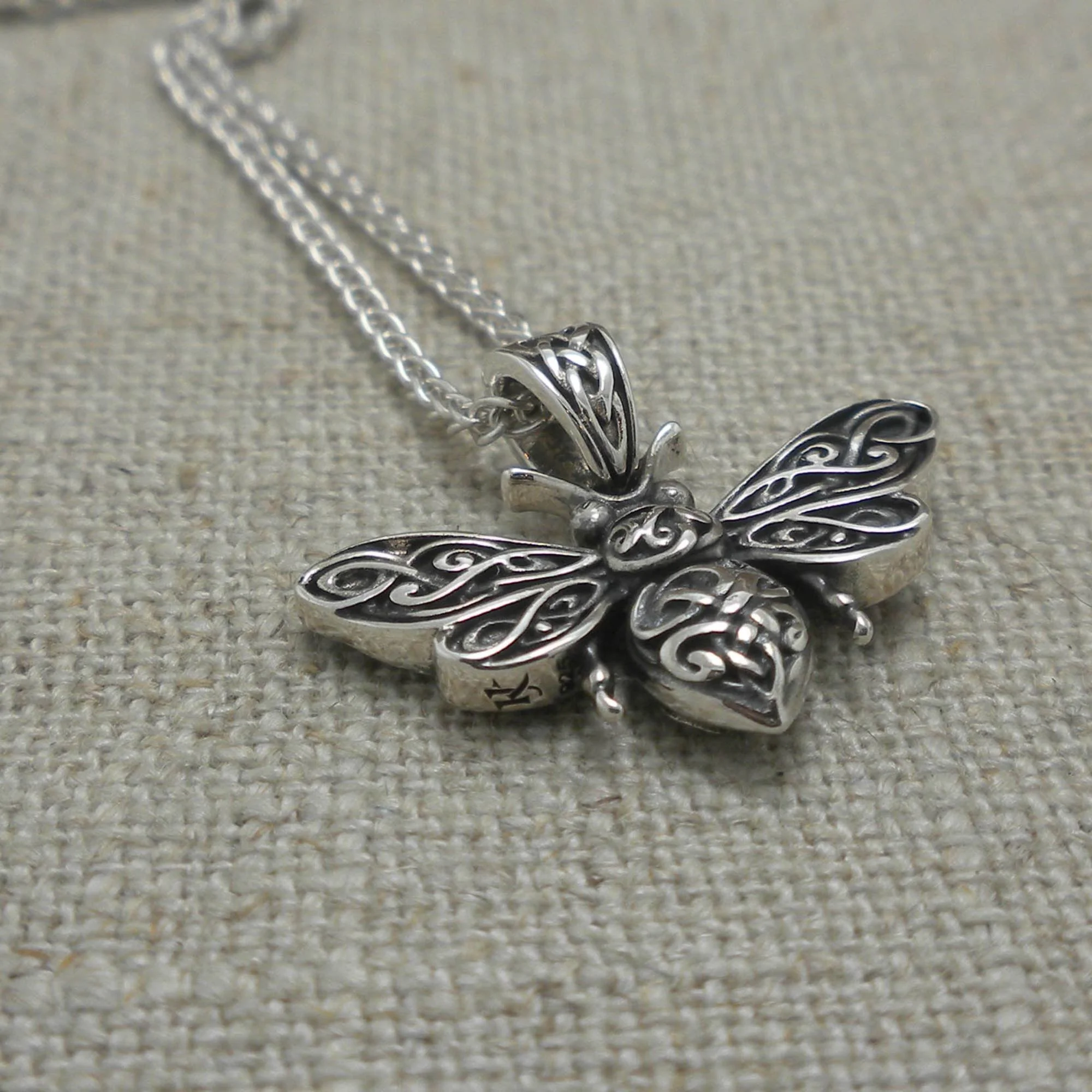
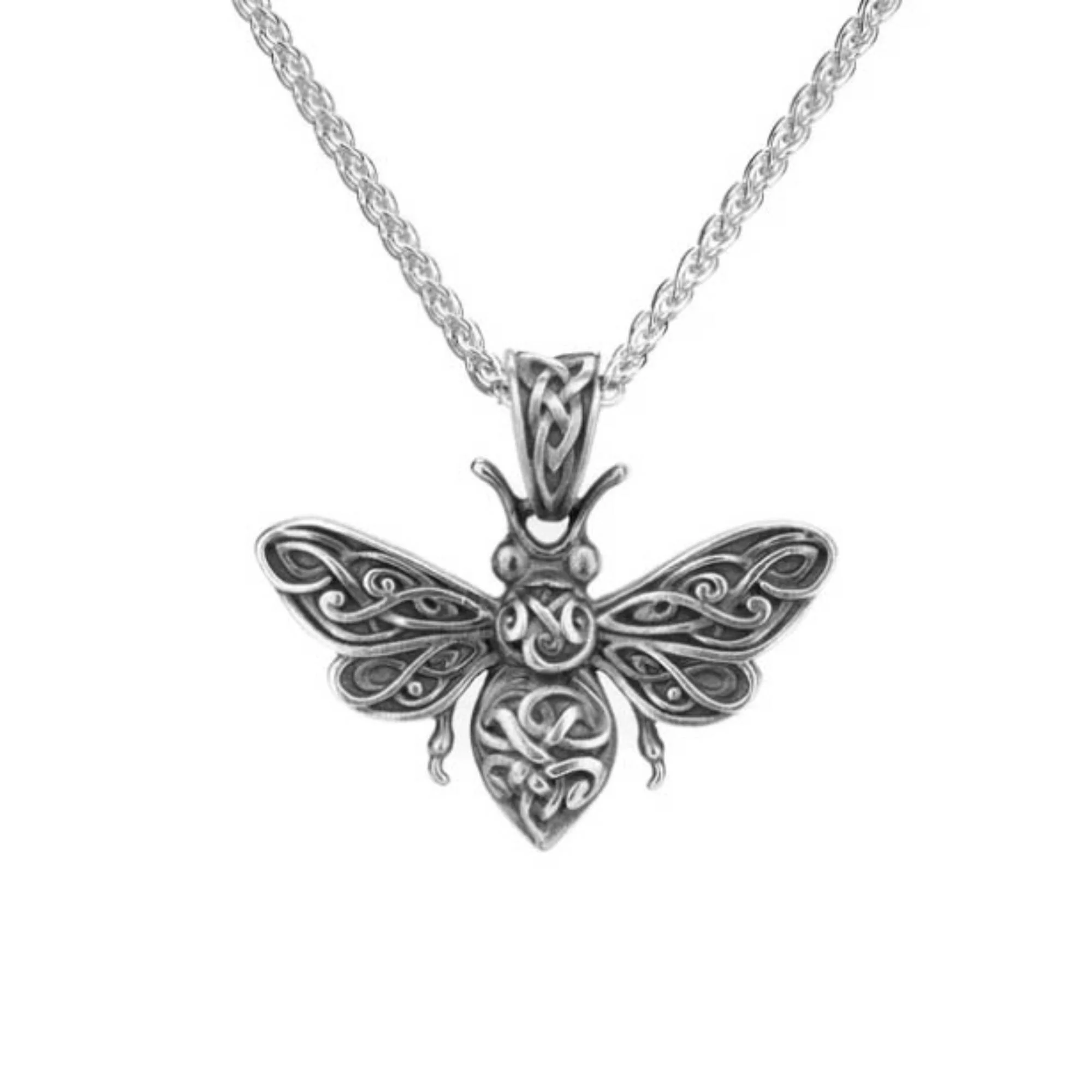
A Celtic bee symbolizes community, diligence, and spiritual connectivity, combining practical and mythic meanings within Celtic art and tradition.
Community and cooperation: Bees represent social organization and the interdependence of members working toward a common good. In Celtic contexts this emphasizes kinship, clan responsibility, and the importance of collective effort.
Diligence and industry: The bee’s tireless work gathering nectar and producing honey stands for persistence, skill, and the rewards of steady labor. It can be a reminder to cultivate patience and craftsmanship.
Sweetness and abundance: Honey is associated with nourishment, prosperity, and the good things of life. The bee as producer of honey may symbolize blessings, fertility, and the flourishing of the land.
Connection between worlds: In Celtic myth and symbolism, bees (and beeswax/honey) often act as bridges between the human world and the Otherworld or the realm of spirits. They can carry messages, guide souls, or serve as omens.
Wisdom and inspiration: Because bees collect nectar from many flowers, they are sometimes linked to gathering knowledge and inspiration—bringing disparate sources together into a single, enriched whole.
Protection and sacredness: Honey and beeswax were used in rituals, offerings, and medicinal practices in Celtic culture, granting the bee a sacred aspect tied to healing, ritual protection, and consecration.
Visual motifs in Celtic art may show bees alongside knotwork or placed within symbolic scenes, reinforcing themes of continuity, interconnection, and the cyclical nature of life.